



Hey there! Ready to dive into a world of fun and deception? The card game Cheat, also known as “I Doubt It” or “Bluff,” is perfect for game nights with friends and family. It’s all about strategy, a little bit of luck, and a whole lot of bluffing. Whether you’re an aspiring novelist looking for a break or a content marketer wanting a casual game to unwind, Cheat is the game for you. Let’s break down the rules and get you started on your bluffing journey! To find more, check on hantam88
To play Cheat, you’ll need:
- A standard deck of 52 playing cards.
- 3 to 10 players. The more, the merrier!
- A flat surface to play on.
A Standard Deck of Cards
A standard deck of cards includes 52 cards divided into four suits: hearts, diamonds, clubs, and spades. Each suit has 13 ranks, ranging from Ace to King. Ensure your deck is complete before starting the game, as missing cards can disrupt the gameplay and strategy.
Ideal Number of Players
While Cheat can technically be played with as few as three players, the game truly shines with a larger group. More players mean more bluffing opportunities, increased unpredictability, and heightened excitement. Aim for a group of 5 to 8 players for the best experience, but feel free to adapt based on the number of friends available.
Setting the Scene
Find a flat surface that allows all players to comfortably reach the center of the playing area. This could be a dining table, a coffee table, or even a spacious floor. Ensure that everyone has enough room to hold their cards discreetly, as hiding your hand is crucial to maintaining a successful bluff.
Objective of the Game
The goal in Cheat is simple: be the first to get rid of all your cards. But there’s a twist! You’ll have to bluff your way through, pretending to play cards you might not actually have. Can you keep a straight face and outsmart your opponents?
Getting Rid of Your Cards
The primary objective is to dispose of all your cards as quickly as possible. This requires a mix of skillful bluffing and strategic card play. As you aim to empty your hand, pay attention to the cards being played and the reactions of your opponents to gauge the right moments to bluff.
The Art of Bluffing
Bluffing is the heart of Cheat. Successfully convincing your opponents that you have played a certain card, even if you haven’t, is key to winning. Practice subtle facial expressions and body language to prevent giving away any tells. The more convincing your bluff, the less likely you are to be called out.
Outsmarting Your Opponents
Observing and understanding your opponents is crucial. Pay attention to patterns in their play and any signs of hesitation or overconfidence. Use this information to decide when to challenge a bluff and when to let it slide. Outsmarting your opponents involves a balance of keen observation and timely decision-making.
Setting Up the Game
- Shuffle the Deck: Give the deck a good shuffle. Make sure it’s nice and mixed up.
- Deal the Cards: Deal all the cards one by one to the players. It’s okay if some players have one card more than others.
- Choose the Starting Player: Decide who goes first. It could be the person to the left of the dealer, or you can pick randomly.
Shuffling Like a Pro
A well-shuffled deck ensures fairness and unpredictability in gameplay. Use a variety of shuffling techniques, such as the riffle shuffle or the overhand shuffle, to mix the cards thoroughly. If you’re playing with a larger group, consider allowing each player to shuffle the deck once to ensure everyone is satisfied with the randomness.
Dealing the Cards
Distribute the cards evenly among all players. It’s normal if some players end up with one more card than others, especially in larger groups. This slight imbalance adds an extra layer of strategy, as players with fewer cards might have an easier time getting rid of their hands, but could also become targets for suspicion.
Deciding the Starting Player
Choosing the starting player can be as simple or as creative as you like. You could draw cards, with the highest or lowest card determining the first player. Alternatively, you can opt for a fun method, like asking a trivia question and letting the first correct responder start. The chosen player will begin the sequence of declaring cards.
Game Play
Here’s where the fun begins! Follow these steps to play Cheat:
Playing a Turn
- Declare Your Cards: On your turn, place 1 to 4 cards face down in the center and declare them as a certain rank. For example, “Two twos.”
- Bluff or Truth?: You can either tell the truth about the cards or bluff. It’s up to you!
Declaring Your Cards
On your turn, choose between one to four cards from your hand to play. Place them face down in the center of the playing area. The number of cards you declare can influence whether opponents believe you, so choose wisely. The declared rank should follow the sequence, creating a rhythm and pattern for others to follow.
Bluffing or Being Honest
Deciding to bluff or tell the truth depends on your strategy and the cards in your hand. If you have the declared rank, you might choose to play honestly. However, if you’re missing the rank, a bluff becomes necessary. Remember, the confidence in your voice and body language can often sell a bluff more convincingly than the cards themselves.
Timing Your Plays
Timing is crucial in Cheat. If you bluff too frequently, you might become suspicious to others. On the other hand, if you’re too honest, you might miss opportunities to get rid of unwanted cards. Pay attention to the flow of the game and adapt your strategy based on the reactions of your opponents.
Challenging a Bluff
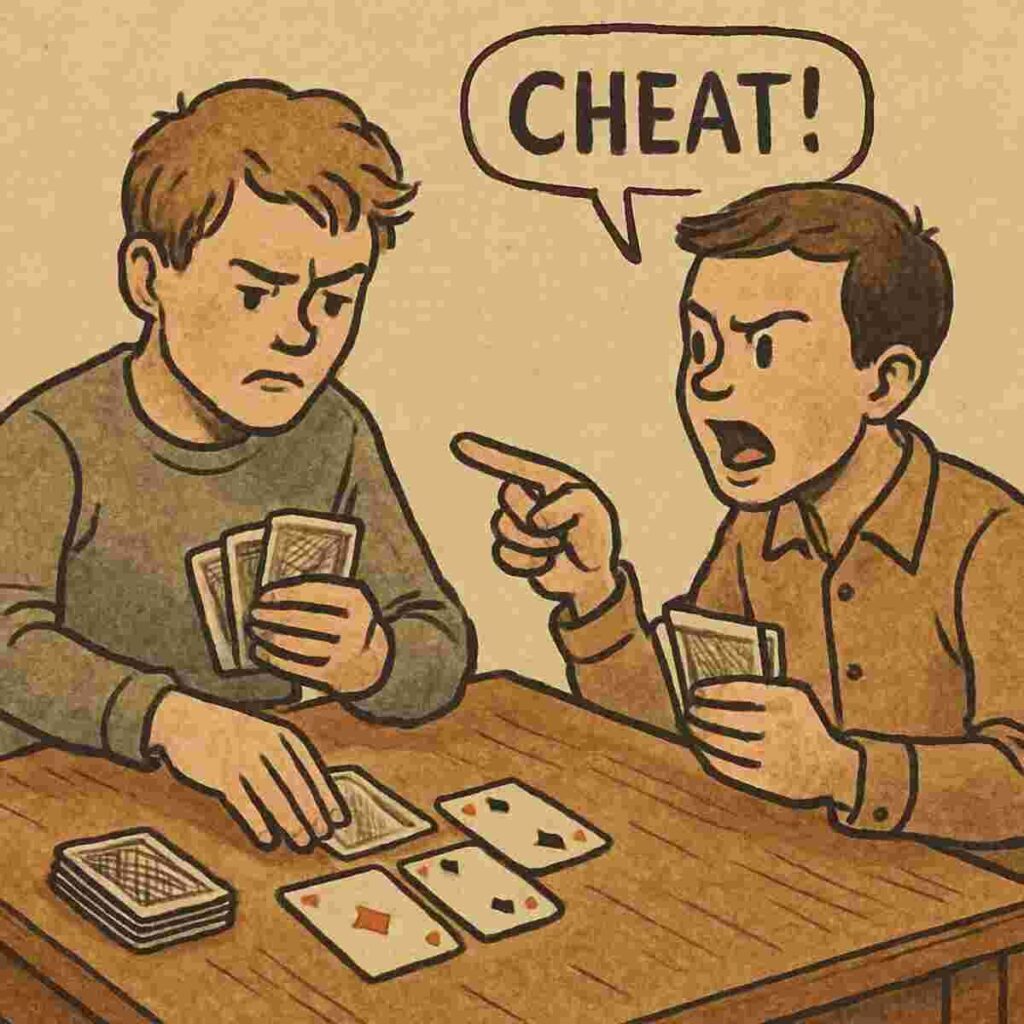
- Call “Cheat!”: If you think someone is bluffing, call out “Cheat!” immediately after they place their cards.
- Reveal the Cards: The accused player must turn over the cards they just played. If they were bluffing, they pick up the entire pile of cards in the center. If they were telling the truth, the challenger must pick up the pile.
Spotting a Bluff
Recognizing a bluff involves keen observation and intuition. Look for signs like inconsistent play, nervous habits, or abrupt changes in behavior. Keep track of the cards already played to identify unlikely claims. The more you play, the better you’ll become at detecting subtle cues that indicate a bluff.
Calling “Cheat!”
When you suspect a bluff, don’t hesitate to call “Cheat!” Timing is crucial; you must call it immediately after the cards are placed but before the next player takes their turn. A successful call results in the bluffer picking up the pile, while a failed call means you’ll have to add the pile to your hand.
The Consequences of Challenging
Challenging a bluff is a high-stakes move. Successfully catching a bluff can significantly impact the game, especially if the pile is large. However, incorrectly challenging an honest play could set you back considerably. Weigh the risks and rewards carefully before deciding to call out a bluff.
Continue the Game
- Next Turn: The play continues with the next player taking a turn, declaring cards of the next rank in sequence.
- Card Sequence: The sequence is Ace, Two, Three, … King, and then back to Ace.
Keeping the Sequence
Maintaining the correct sequence is vital to the flow of the game. Starting with Ace and progressing to King, players must follow the order without skipping ranks. This structured progression helps players keep track of the game and anticipate potential bluffs based on previously declared ranks.
Managing the Next Turn
After a successful or failed challenge, or a clean round, the next player takes their turn. The game flows clockwise, ensuring that each player has an equal opportunity to play their cards. As the game progresses, players must adapt to the evolving dynamics and adjust their strategies accordingly.
Adapting to the Game’s Flow
The flow of Cheat is dynamic, with players constantly adapting to new information. Keep an eye on the pile size and the cards being played to adjust your strategy. Adaptability is key; being too rigid can make you predictable and easier to read, while being too erratic can arouse suspicion.
Winning the Game
The first player to get rid of all their cards wins the game! Celebrate your victory, but don’t forget to enjoy the fun of bluffing along the way.
The Path to Victory
Reaching victory in Cheat requires a blend of strategy, skill, and luck. Successfully managing your cards, bluffing effectively, and knowing when to challenge are all part of the journey. As you play, refine your approach and learn from each game to improve your chances of winning.
Celebrating Success
Winning in Cheat is not just about being the first to discard all your cards; it’s about outsmarting your opponents and mastering the art of deception. Celebrate your victory with pride, but remember to keep the atmosphere light-hearted and enjoyable for everyone involved.
Embracing the Experience
Whether you win or lose, the true joy of Cheat lies in the experience. The laughter, the surprises, and the thrill of the bluff make each game memorable. Embrace each round as an opportunity to hone your skills, connect with friends, and enjoy the delightful unpredictability of the game.
Tips and Strategies
Master the Art of Bluffing
- Keep a Poker Face: Whether you’re telling the truth or bluffing, keep a straight face. Don’t give away any hints!
- Mix it Up: Alternate between telling the truth and bluffing to keep your opponents guessing.
- Watch Your Opponents: Pay attention to other players’ reactions. If someone hesitates or seems nervous, they might be bluffing.
Perfecting Your Poker Face
A strong poker face is essential in Cheat. Practice maintaining a neutral expression regardless of whether you’re bluffing or being truthful. Avoid excessive gestures or facial expressions that might betray your hand. The more consistent you are, the harder it will be for opponents to read you.
Diversifying Your Strategy
Avoid becoming predictable by alternating between truth and bluff. This unpredictability makes it difficult for opponents to gauge your intentions. Mix up your strategy by incorporating different bluffing techniques and varying the number of cards you play to keep others on their toes.
Observing Opponents
Successful Cheat players are keen observers. Watch for patterns in your opponents’ play, such as consistent card declarations or repeated bluffing. Pay attention to non-verbal cues like hesitations, fidgeting, or changes in tone. This information can help you decide when to call a bluff or let it pass.
Be Strategic
- Card Counting: Keep track of what cards have been played to make informed decisions.
- Challenge Wisely: Only call “Cheat!” if you’re reasonably sure. Otherwise, you might end up with the whole pile!
Tracking Played Cards
Card counting is a valuable skill in Cheat. By remembering which cards have already been played, you can make educated guesses about the likelihood of bluffs. This knowledge helps you decide when to challenge and when to hold back, giving you a strategic edge over less attentive opponents.
Making Informed Challenges
Deciding when to call “Cheat!” is a critical aspect of the game. Use the information you’ve gathered from observing players and tracking cards to make informed challenges. Only call out a bluff if you have strong evidence, as a failed challenge can significantly impact your chances of winning.
Balancing Risk and Reward
Every decision in Cheat involves weighing the risks and rewards. Consider the potential benefits of calling a bluff against the consequences of being wrong. This balance is crucial to maintaining a competitive edge and ensuring that your strategy aligns with the current state of the game.
Variations of Cheat
Cheat is a versatile game with many variations. Here are a few to try:
- Reverse Cheat: The sequence of ranks is reversed, starting from King down to Ace.
- Double Card Cheat: Players must play at least two cards each turn.
- Silent Cheat: Players declare their cards without speaking, adding an extra layer of mystery.
Exploring Reverse Cheat
In Reverse Cheat, the rank sequence is flipped, starting from King and descending to Ace. This variation introduces a new challenge, as players must adjust their strategy to the reverse order. The change in sequence can catch experienced players off guard, adding an exciting twist to the traditional game.
Embracing Double Card Cheat
Double Card Cheat requires players to play at least two cards per turn, increasing the stakes and the potential for bluffing. This variation encourages bolder plays and more frequent bluffs, as players strive to keep up with the higher card turnover. The added pressure creates a fast-paced and exhilarating game.
Delving into Silent Cheat
Silent Cheat removes verbal declarations, forcing players to rely on non-verbal cues and intuition. This variation heightens the mystery and suspense, as players must interpret body language and facial expressions without the aid of spoken clues. Silent Cheat challenges players to refine their observational skills and adapt to a more subtle form of gameplay.
Wrap-Up
And there you have it! With these rules and tips, you’re all set to play Cheat and have a blast. Remember, it’s not just about winning; it’s about the thrill of the bluff and the laughter along the way. Whether you’re unwinding after a long day of writing or looking for a fun way to connect with friends, Cheat is sure to deliver endless entertainment. So grab a deck of cards, gather your friends, and let the games begin!
Happy bluffing!
